
How to Start a Bookkeeping Service Business – Step by Step Guide
Bookkeeping is one of the boring yet highly profitable businesses. Every business, small or large, needs someone to manage their finances, track income and expenses, and keep the books organized.
With low startup costs, flexible hours, and recurring clients, bookkeeping can be a steady income generator without dealing with physical inventory or messy work.
Step 1: Decide Your Niche


You don’t have to manage everything at first. Focus on:
Small businesses & startups – simple bookkeeping, expense tracking
Freelancers & solopreneurs – invoices, tax prep, income/expense tracking
E-commerce sellers – inventory tracking, payment reconciliation
Specialized niches – restaurants, gyms, clinics
Tip: Start with one type of client, then expand once you’re comfortable.
Step 2: Learn & Get Certified (Optional but Recommended)


You can start small without certification, but having credentials boosts trust.
Online bookkeeping courses: $200–$400
Certification options: QuickBooks Certified ProAdvisor, Xero Certification, Wave Accounting courses
Basic accounting knowledge is essential (balance sheets, invoices, expense tracking)
Tip: Many clients prefer someone trained in QuickBooks or Xero.
Step 3: List of Tools & Software


Basic Tools
Computer or laptop
High-speed internet
Accounting software (choose one or two):
QuickBooks ($20–$50/month)
Xero ($30–$60/month)
Wave (free)
Optional Tools
Google Sheets or Excel for simple clients
Invoice software if you plan to handle client billing
Cost to start: $200–$500 depending on software and optional courses
Step 4: Set Your Pricing
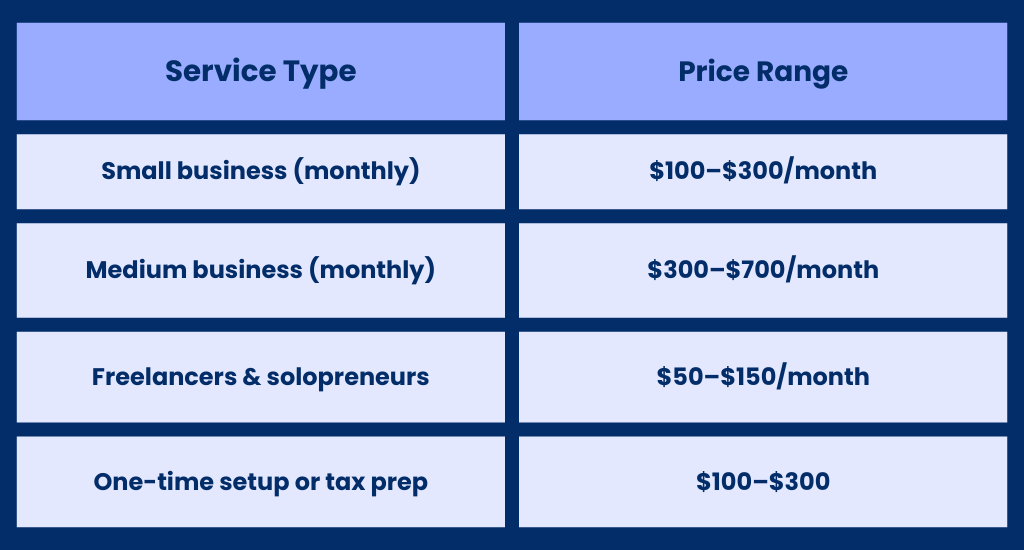
Pricing depends on client size, frequency, and services offered.
Tip: Offer monthly recurring packages for steady income.
Step 5: Find Clients


Start with your network: friends, family, local small businesses
Attend local business meetups or networking events
Use online platforms: LinkedIn, Facebook groups, Upwork, Fiverr
Post flyers or ads in coworking spaces, business centers, or local boards
Tip: Small businesses often outsource bookkeeping rather than hire full-time, giving you steady contracts.
Step 6: Marketing & Building Trust


Offer first-month discounts for new clients
Referral program: “Bring another business, get 10% off”
Share testimonials & case studies (even mock examples at first)
Maintain professional branding: business cards, email signature, logo
Step 7: Operations & Efficiency


Set up a standard process for each client:
Receive receipts/invoices
Enter transactions into software
Reconcile accounts
Generate reports
Track time spent per client
Keep organized digital folders for documents
Tip: Automate recurring tasks using accounting software features.
Step 8: Scale Your Business


Once you have steady clients:
Hire part-time bookkeepers for additional clients
Offer tax preparation, payroll, or invoicing services
Target larger businesses with more complex needs
Expand online to serve remote clients globally
Example Earnings:
5 small business clients × $200/month = $1,000/month
5 medium clients × $500/month = $2,500/month
Total: ~$3,500/month from a home-based service
Step 9: Legal & Practical Considerations


Register your business (local regulations)
Liability insurance (recommended if handling sensitive financial data)
Keep detailed records for taxes
Use secure systems to store client financial data
Step 10: Tools to Make Business Easier


Client management: Trello, Notion, or Google Sheets
Communication: WhatsApp, email, Zoom
Payment tracking: Bank transfers, PayPal, or local e-wallets
Document storage: Google Drive, Dropbox, or secure cloud service
Honest Conclusion
Bookkeeping is a simple but reliable business that can grow over time and become very profitable. It requires low startup costs, offers flexible working hours, and has high recurring income because businesses always need someone to manage their finances. Even though it may seem boring, bookkeeping provides steady and quiet income for those who do it consistently.
© 2026. All rights reserved.
10 Profitable Items to Resell in 2026