
How to Start a Pest Control Business – Step by Step Guide
Pest control is a boring but highly profitable business. Nobody likes pests — whether it’s rodents, insects, or termites — and demand spikes year-round.
With proper training, minimal equipment, and recurring service contracts, pest control can become a steady source of income.
Step 1: Decide Your Niche


There are many types of pest control. Focus on one or two at first:
Residential Pest Control – homes, apartments, condos
Commercial Pest Control – offices, restaurants, shops
Specialized Pest Control – termites, bed bugs, rodents
Seasonal Services – mosquito spraying, fly control
Tip: Start small with your local community, then expand.
Step 2: Get Certified / Licensed


Most countries/states require pest control certification or license to handle chemicals safely.
Certification cost: $100–$300, depending on location.
Optional short courses on safe chemical use and pest biology help credibility.
Tip: Even if not mandatory for your area, certification builds trust with clients.
Step 3: List of Equipment & Supplies


Basic Supplies
Safety gear: gloves, goggles, masks
Pesticide sprayers, bait stations, traps
Pest control chemicals (approved for your area)
Measuring tools for chemicals
Flashlights, ladders, and inspection tools
Startup cost: ~$150–$200 for basic equipment
Optional / Recommended
Branded uniform or t-shirt
Business cards, flyers
Vehicle for mobile serviceQ
Step 4: Pricing Strategy
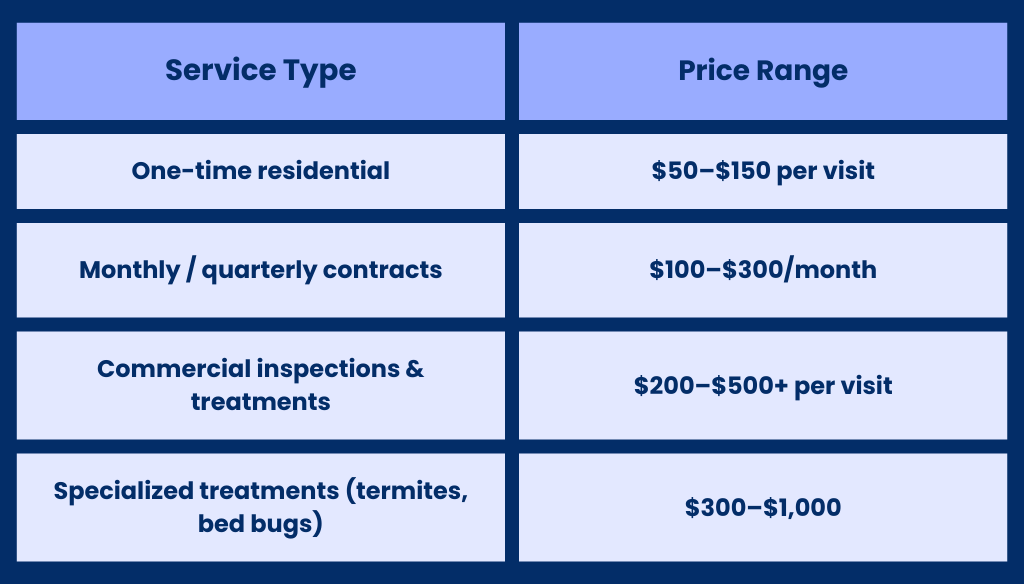
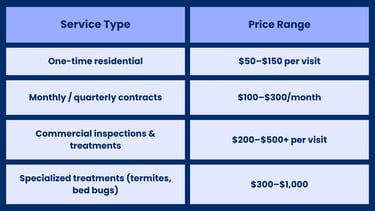
Pricing depends on type of pest, size of area, and whether it’s one-time or recurring.
Tip: Offer monthly or seasonal packages for recurring revenue.
Step 5: Find Clients


Start with local homes & neighbors
Distribute flyers or door hangers
Social media: Facebook, WhatsApp, Instagram groups
Partner with apartment complexes, restaurants, and shops
Online directories like Google Maps, JustDial, or local business listings
Tip: Repeat customers are your best source of stable income.
Step 6: Marketing & Promotion


Offer first-time discounts
Referral program: “Refer a friend and get your next visit 20% off”
Show before & after photos of treated areas
Highlight safety and eco-friendly options if possible
Step 7: Operations & Efficiency


Inspect the area carefully before treatment
Follow chemical safety guidelines
Record all treatments per client
Track recurring visits and follow-up schedules
Tip: Efficiency and safety build trust → more recurring contracts.
Step 8: Expand & Scale


Once you have steady clients:
Hire part-time technicians for larger coverage
Offer specialized treatments: termites, rodents, mosquitoes
Expand into commercial contracts for higher earnings
Invest in better equipment: power sprayers, thermal cameras
Example Earnings:
10 residential clients × $100/month = $1,000/month
5 commercial clients × $300/month = $1,500/month
Total = $2,500/month from a small local setup
Step 9: Legal & Safety Considerations


Check local licenses and permits
Follow chemical handling and storage regulations
Use safety equipment to protect yourself and clients
Keep detailed records for insurance and taxes
Step 10: Tools to Make Business Easier


Scheduling: Google Calendar, Trello, or pest control apps
Payment tracking: Cash, bank transfer, or mobile payments
Communication: WhatsApp, email, or SMS reminders for recurring visits
Customer records: Simple digital files or CRM software
Honest Conclusion
Pest control is a simple but essential business that can be very profitable. There is steady demand throughout the year because people always need help dealing with pests. The startup costs are relatively low, and there is a good opportunity to earn recurring income through regular service contracts. Even though it may seem like a boring business, pest control can become a reliable and steady source of income.
© 2026. All rights reserved.
10 Profitable Items to Resell in 2026